Apr 19, 2013

Supanova!

Big weekend for me! I'm heading down to the Gold Coast for the annual Supanova Pop Culture Expo. 

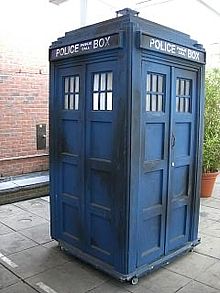
This is an amazing event where lots of people come dressed as their favourite characters from pop culture tv, books, games and film. The first time I went, I never even knew what one of these was:

But since then I've become a huge fan and what I want to see most this year is:

I'm also going to have my own stand! I'll be selling and signing copies of:

The kids love to dress up:

I won't, but maybe I'll just wear a cool hat:

My next big event? In May I release Dognapped?
Help me celebrate the release of Dognapped?
I'll be releasing Dognapped? in May and I'd love and appreciate your help! Dognapped? is a mystery novel for girls aged 9-12yrs. If you'd like to join the blog tour, sign up below. I'll email you closer to the release date to provide you with a fully-formatted post you can simply add to your blog to save you time and effort (or feel free to write your own, send me interview questions or provide a topic you'd like me to write about for your blog).
Will there be prizes? YES! I'm thinking... Kindle Fire and Amazon gift cards.

 Loading InLinkz ...

Apr 13, 2013

7 Tips for Choosing Your Book Cover Art

Cover reveal! Dognapped?, the first book in the Dog Show Detective Mystery series is almost ready for release! Can you tell I'm excited? If you'd like to be involved in the Dognapped? blog tour, check for details at the bottom of this post.
Cover design is an essential elements for your novel if you want a professional product. And you do want a professional product. The first impression readers will have of your novel is your cover. Make sure it entices!

Here are my tips for choosing the perfect image:
  1. Represent your genre. Research to see what styles are trending in your genre. E.g. Romance readers like a couple embracing or often a hunky fellow with his shirt off. But if you write romantic comedy, you might show a couple back to back instead (to emphasise the conflicts rather than the romance scenes).
  2. Professional images. There are so many sites such as Shutterstock, where you can purchase a licence to us professional images. Many will need very little manipulating to turn into a brilliant cover. If you are illustrating your cover, keep in mind composition. Make sure the artwork covers the entire space, it looks terrible when it doesn't quite reach the edges.
  3. Don't over-clutter. I see a lot of covers where the author has tried to include every element of the story, setting and characters on the cover. It just gets busy. Less is more. A simple symbol (like a crow or tombstone for horror  stories) is more effective than a crowded cover.
  4. Go with the trends. For YA novels, the grunge look is huge with the faded or blackened edges. Almost all genres are embracing the vintage look too now, with a silkscreened or cut-out look that you would expect from the 1950s.
  5. Experiment. If you're releasing an e-book and you can't narrow down your choices, upload one for a while and then change. See which one sells better.
  6. Trust the experts. I always have a clear idea of what I want on my cover, and then my graphic designer (www.bookcovercafe.com) shows me something better. Don't be stubborn, be open to ideas and suggestions.
  7. The reader's choice is more important than yours. My books are mostly for kids 10-13, so even if I love, love, love a cover design, I have to listen when a whole bunch if kids tell me they don't like it.
Want to know more about cover design? Here's some more links:
DIY Book Covers - an overview of everything you need to know.
How to Font Your Cover - Font, it's more important than you think!
Help me celebrate the release of Dognapped?
I'll be releasing Dognapped? in May and I'd love and appreciate your help! Dognapped? is a mystery novel for girls aged 9-12yrs. If you'd like to join the blog tour, sign up below. I'll email you closer to the release date to provide you with a fully-formatted post you can simply add to your blog to save you time and effort (or feel free to write your own, send me interview questions or provide a topic you'd like me to write about for your blog).
Will there be prizes? YES! I'm thinking... Kindle Fire and Amazon gift cards.


 Loading InLinkz ...

Apr 1, 2013

The Invisible Workings of Story

Have you visited the TED site for inspirational and educational videos? There are some amazing resources there, and many of these can act as free workshops to improve your writing.

The video below is Andrew Stanton telling us the essential ingredients required for a good story. If you're having trouble with your manuscript, check and see what you might be missing. For those that don't like to sit still for a video, I have summarised in my own thoughts, what the key points are below.


  1. Every story should open with a promise. Can the reader see straight away the adventure awaiting, or the romance that will blossom? If you don't have a clue in the opening, then why would they want to read on?
  2. The reader wants to work at the story. Carefully constructed absence of information draws us in, we want to solve the puzzle. Don't give the reader 4, give them 2+2.
  3. What drives your character? This is their internal motivation, one they usually have no idea exists, it's an itch they can't scratch. When revealed it comes as a shock to the character, but not us, we knew this what they really needed all along.
  4. Change. If your story is remains constant, you have no story. Insert changes to force action.
  5. Anticipation - have you made me wonder what will happen next? This is the 'page-turner' element.
  6. A strong theme is present through the whole story. So that every single thing you put into your novel is moving it towards the inevitable end (even though the end won't seem inevitable during the journey).
  7. Can you evoke wonder? This is tricky to explain because Stanton even says there is no way to fake this. I think if you are true to the next suggestion, you will achieve wonder.
  8. Draw from what you know is real, infuse your core beliefs into your story (without preaching). Any element of simple truth will resonate with the reader.
There's my interpretation of Stanton's elements of the invisible workings of story. Hope you get a chance to watch the clip (and many more) from TED.